TRIP PREPARATION

No matter how you choose to get to Flower Garden Banks National Marine Sanctuary, your trip will require preparation.
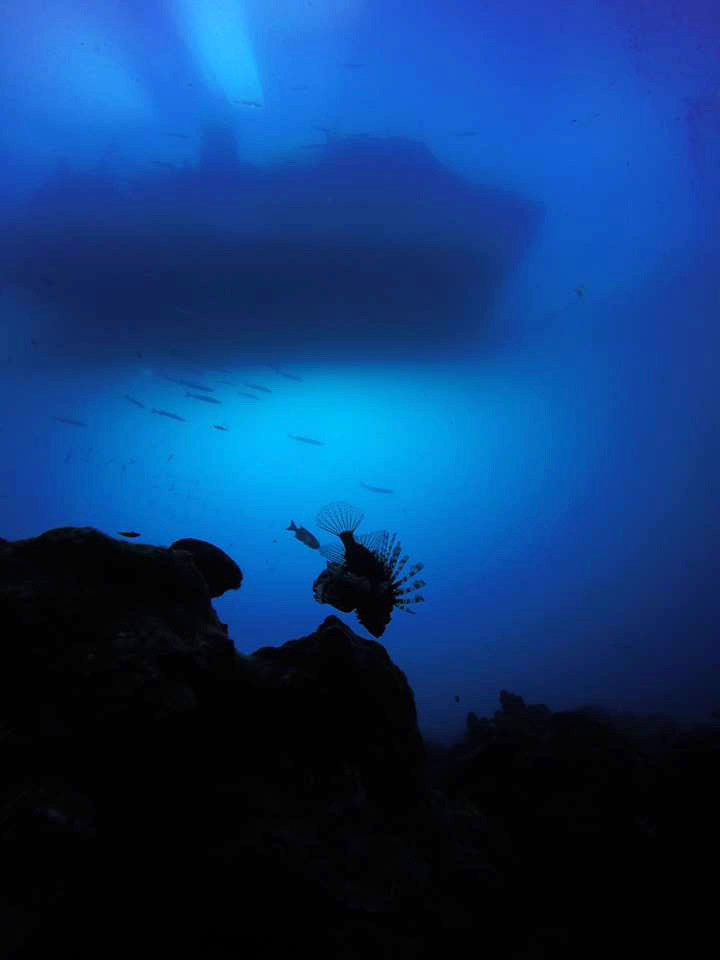
A trip to the sanctuary has many challenges, including venomous lionfish. (Image: FGBNMS/Johnston)
Here is a basic check list to help you plan. This is not a comprehensive list, but a starting point for your trip plan. You are ultimately responsible for ensuring that you have taken all necessary precautions to maintain your health and well-being.
- Check the latest marine weather forecast.
- Review standard safe boating procedures and check all safety gear to ensure it is in good working order.
- Upload boundary and mooring buoy coordinates to your GPS unit, if taking your own vessel.
- Reviewed sanctuary regulations & remove any illegal fishing gear from your vessel.
- Reviewed recommended reef etiquette, including mooring buoy use.
- packed your dive gear and related items?
- determined that you can safely negotiate the challenges of diving in the sanctuary?
- recently refreshed your dive skills in a controlled environment?
- remembered to pack your personal care items such as sun screen, medications, etc.?
- remembered to pack your field guides and REEF Fish Survey Project materials?
top of page
CHALLENGES OF DIVING
Most dive professionals consider Flower Garden and Stetson Banks to be intermediate to advanced dive sites.
While conditions can be calm and suitable for beginners, those occasions are extremely rare and totally unpredictable. More typically, you will experience multiple currents, running in different directions and speeds at different depths. Currents may develop or disappear in the middle of your dive. Or, they may change direction and/or speed during your dive, requiring you to swim against a current to return to your exit point.
Wave height and frequency are also quite variable and can make it difficult to reboard the boat safely. Previous saltwater experience is strongly recommended before diving in the sanctuary.
A more recent hazard is the presence of invasive lionfish. These venomous fishes from the south Pacific can give you a nasty sting if you bump into the spines of their dorsal and anal fins.
Over one hundred miles of water lie between you and the nearest medical facility. This is not the place to overestimate your abilities and physical condition.
top of page
CURRENT SANCTUARY CONDITIONS
You can get an idea of current sanctuary conditions using our Ocean Conditions Dashboard.
This dashboard presents current conditions* from available satellite datasets and is accessed through ERDDAP. Data is updated approximately every hour, however no data is available when clouds obstruct the satellite's view.
*This data is provided as general information and is not intended for navigational purposes.
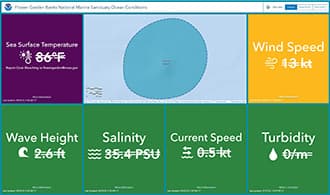
Click on this image or the link above to access the live Ocean Conditions Dashboard. (This image is just a representation of the actual dashboard and does not contain current information.)
MOORING BUOYS & BOUNDARIES

Please visit our sanctuary boundaries and mooring buoy pages for maps and GPS coordinates to assist you in your travels.