school of fish in background
homeabout your sanctuaryvisiting your sanctuaryeducationsciencemanagementnews and eventsprotecting resourcesimage librarydocument libraryopportunities volunteersadvisory councilpartnersNOAA logo - a circle with a stylized seabird in flight; background is dark blue above the bird and light blue below the bird.

Science

Science Home    Research    Monitoring    Habitat Characterization
Science Projects    Expeditions    Tools & Technology
Publications

MONITORING

Monitoring, in many different forms, is an essential part of the science efforts at the Flower Garden Banks National Marine Sanctuary. Click on the links below to visit each of the following categories on this page:

Water Quality

Long-Term Monitoring

Coral Bleaching

Coral Spawning

Hurricanes & Tropical Storms

Marine Debris

WATER QUALITY

During each cruise, opportunistic temperature and salinity profiles are measured by staff researchers using a YSI probe deployed by hand. These data compliment the data collected by in situ water quality instruments on the sea floor at each bank by giving additional information about the conditions at the surface and throughout the water column.

Temperature and Salinity Data 2005-2008 (36kb pdf)

In addition, the R/V Manta is equipped with a SeaKeeper 1000 monitoring system. This automated system continuously monitors weather and ocean parameters while the ship is underway. The data is available on board the vessel and is also transmitted via satellite to the International SeaKeepers Society and accessed by the National Coastal Data Development Center (NCDDC).

The SeaKeeper 1000 tracks the following parameters:

  • Salinity
  • Sea Surface Temperature (SST)
  • Dissolved Oxygen
  • pH (acidity or alkalinity of sea water)
  • eH (potential of sea water to oxidate materials in suspension)
  • Wind Speed & Direction
  • Relative Humidity
  • Barometric Pressure
  • Air Temperature

You can view the most recent data sets from the R/V Manta, by visiting our Office of National Marine Sanctuaries Ocean Observations page . Once you have linked to the page, select RV Manta as the Ship Name in the top left corner then click "Find It". You can then click on the red lines/dots that show the Manta's latest trip or select specific observation data from the column on the right side of the page.

To learn more about the SeaKeepers Monitoring system, visit the International SeaKeepers Society web site.

top of page

LONG-TERM MONITORING

The three banks of the Flower Garden Banks National Marine Sanctuary are monitored on an annual basis as part of a Long-term Monitoring program. This program, which first began at East and West Flower Garden Banks, is one of the longest long-term monitoring programs of a coral reef anywhere in the world!

For more information on long-term monitoring activities and reports, please click on the links below.

Long-term Monitoring: East and West Flower Garden Banks

Long-term Monitoring: Stetson Bank

top of page

ADDITIONAL MONITORING

Additional monitoring efforts are also undertaken in response to significant events in and around the sanctuary. These include annual occurrences such as the mass coral spawning, as well as intermittent events and ongoing problems.

For more information on these monitoring activities and reports, please click on the links below:

Coral Bleaching

  • Remote Sensing through NOAA Coral Reef Watch - use this site to see what sea surface temperatures have been this year and how close they are to the bleaching threshhold

Coral Disease

Coral Spawning

Hurricanes and Tropical Storms

Marine Debris

top of page


weather report observations cool stuff get wet


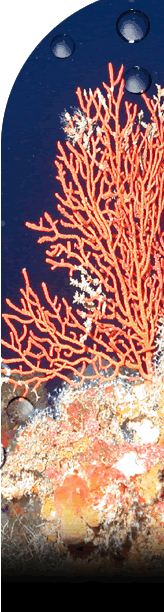
Orange, branching gorgonian (soft coral) anchored in a bed of sponges and other sea life.
   
National Marine Sanctuary logo - a stylized whale tail above waves