

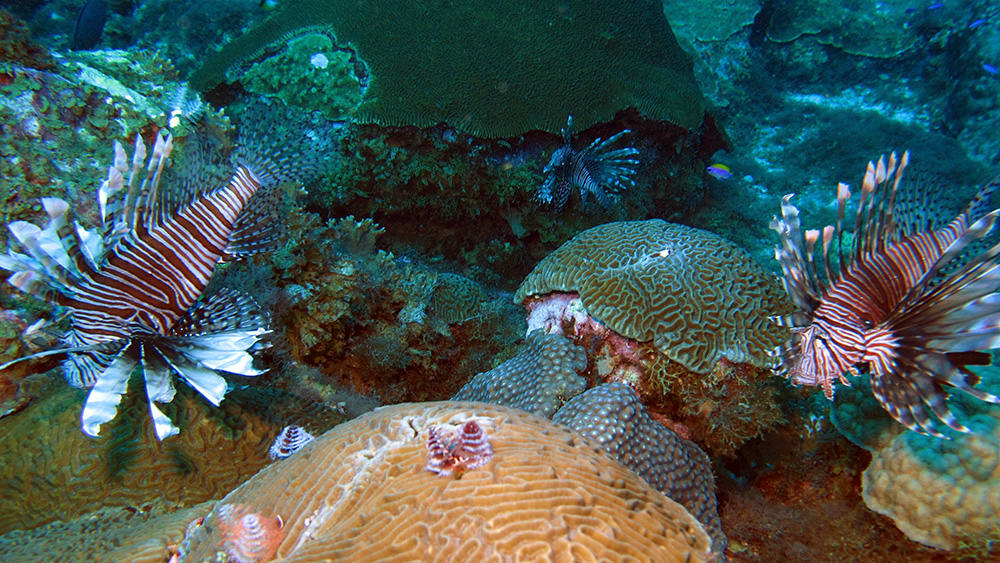
An invasive species is any non-native plant or animal that is likely to cause economic or environmental harm, or harm to human health. Not all non-native species are considered invasive.
From an environmental perspective, invasive species can disrupt local food webs, destroy habitat, or introduce new diseases. From an economic perspective, they can affect people's jobs.
The primary goal in managing invasive species is to prevent them from being introduced in the first place. However, once they are introduced to new ecosystems, the National Invasive Species Council recommends the following approaches:
- Early Detection and Rapid Response - try to halt the invasion as quickly as possible and eradicate the invasive species
- Control and Management - try to slow and/or reduce the impacts of the invasion
- Research - learn about the behavior and habits of the invasive species to help improve management techniques
FGBNMS Invaders
The invasive species of greatest concern at Flower Garden Banks National Marine Sanctuary are Lionfish (Pterois volitans) and Orange Cup Coral (Tubastraea sp.).
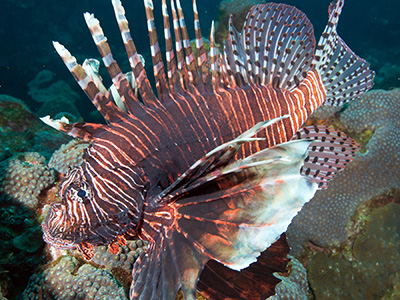
Lionfish
Lionfish are believed to have entered the Atlantic through the aquarium trade, most likely released when no longer wanted. Learn more...
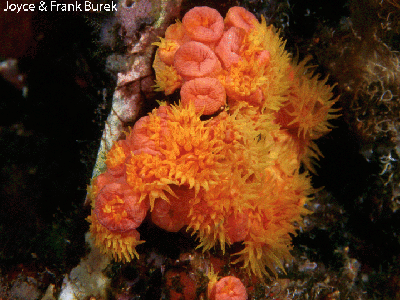
Orange Cup Coral
Orange Cup Coral is believed to have arrived in the Caribbean and Gulf attached to ship hulls or in ship ballast water. Learn more...